CEYLON CHRONICLES · 5TH CENTURY AD
Beyond the King: The Untold Story of the People Who Built Sigiriya
History books remember King Kasyapa’s ambition, guilt, and fear. But look closely at the 200-meter sheer monolith, and you will see the fingerprints of thousands of ordinary men and women who carved an empire into the sky.
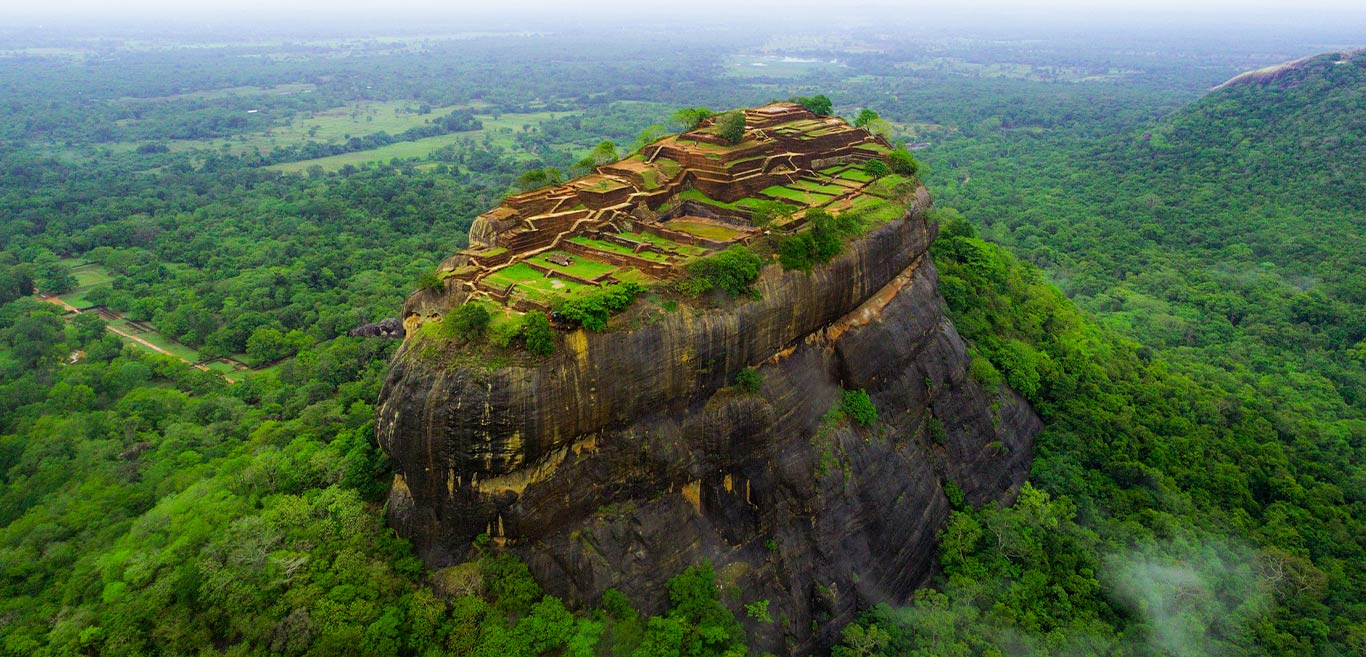
When you stand at the base of Sigiriya in the cool mist of 6:00 AM, the sheer verticality of the rock leaves you breathless. A monolithic column of hardened magma rising two hundred meters straight out of the emerald dry-zone jungle. The story we are usually told is simple: a patricidal prince named Kasyapa, terrified of his exiled brother’s vengeance, fled the sacred capital of Anuradhapura in 477 AD to build an unassailable fortress on top of an isolated stone pillar.
Yet Kings do not haul millions of terracotta bricks up vertical rock faces. Kings do not balance on fragile bamboo scaffolding four hundred feet above the forest canopy, mixing egg whites and bee honey with lime plaster to paint cloud-goddesses. Kings do not calculate the hydraulic friction that pushes mountain water through subterranean terracotta nozzles to create self-pressurizing fountains.
“To truly understand Sigiriya is to stop looking at the crown, and start looking at the calloused hands of the stonecutters, the water-architects, and the cliffside painters who transformed raw terror into timeless grace.”
1. The Engineers of Gravity: How Did They Lift a Palace?
Modern visitors climb Sigiriya using metal spiral staircases and steel railings bolted into the cliff. But in the 5th century, the builders faced a surface so smooth and vertical that even monkeys struggled to grip it.
How did they construct a palace atop this plateau in less than seven years? The answer lies in the ancient Sinhalese mastery of iron wedges, timber scaffolding, and counterweight balance systems:
- Scaffold Peg Holes: Look carefully at the lower rock face; you will spot horizontal rows of square notches chiseled into the granite. Artisans drove seasoned hardwood pegs into these notches, lashed thick jungle vines, and erected tiered bamboo platforms that clung to the stone like swallows' nests.
- The Brick Pulley Trains: Millions of handmade terracotta bricks and carved marble slabs were not carried one-by-one by men on ladders. Ancient engineers erected wooden crane-pulleys anchored to cantilevered timber beams above, using elephant teams at ground level to hoist heavy cargo up the sheer face.
- Cleft-Splitting Technique: To level the summit, stonecutters drilled small incisions into granite ridges, drove dry wooden wedges into them, and poured cold water. As the wood expanded under the heat of the noon sun, the immense pressure fractured the stone cleanly along natural fault lines.
2. The Whispering Frescoes: Painting in the Void
Halfway up the western rock face, in an amphitheater-shaped sheltered pocket, dwell the famous Sigiriya Frescoes. Originally, an estimated five hundred portraits of celestial nymphs (Apsaras or cloud maidens) stretched across the entire western flank of the monolith — creating the illusion of a celestial mountain floating on heavenly clouds.
Imagine the painters: suspended in cane baskets over empty air, buffeted by sudden gusts of wind, holding oil lamps in one hand and brushes of hair and bamboo in the other. They worked with the fresco buono technique, applying mineral pigments — lampblack, yellow ochre, green earth, and red cinnabar — directly onto wet clay plaster mixed with straw and lime. They had only hours to finish each face before the plaster cured forever under the tropical humidity.
What Was Life Like for the People Who Built the Fortress of Sigiriya?
3. Water in the Sky: The Unbroken Hydraulic Symphony
One of the greatest paradoxes of Sigiriya is water. At the top of an isolated dry-zone rock, where tropical heat evaporates every puddle, Kasyapa's royal city had tiered swimming pools, cooled pavilions, and cascading baths.
At the base, the Royal Water Gardens represent the oldest surviving landscaped gardens in Asia. They were designed with mathematical symmetry:
- Gravity Siphons: Water was drawn from the nearby man-made Sigiriya lake, directed into underground brick conduits that narrowed in diameter. As the channel narrowed, water velocity increased.
- The Living Fountains: In the rainy season today, 1,500 years later, circular perforated limestone plates in the garden still spray jets of water into the air without a single mechanical motor. They operate purely on natural hydrostatic head pressure.
- Summit Cisterns: Carved straight out of the summit rock is a massive royal bath (27 meters by 21 meters). Channels cut into the bedrock captured every drop of seasonal monsoon rain, filtering it through pebble traps before replenishing the royal cisterns.
4. The Mirror Wall: The World's First Visitor Guestbook
Beyond the frescoes stands the Ketapath Pawura — the Mirror Wall. Built of polished brick and coated with a porcelain-smooth plaster of egg-white, lime, burnt clay, and honey, it was so reflective in its prime that the king could see his likeness as he strolled along the cliff.
Between the 6th and 14th centuries, ordinary pilgrims, poets, soldiers, and monks who visited the abandoned city scratched over 1,800 graffiti poems into this glaze using metal styluses. They wrote not of battle or conquest, but of aching poetic wonder:
“The deer-eyed maidens of the rock / have captured my heart in their gaze. / Though you stand upon stone, your eyes speak of love / and you will not talk with me who have traveled so far.”
— Anonymous 8th-Century Traveler, Sigiriya Graffiti
Long before Instagram, people journeyed to Sigiriya to marvel at beauty, feeling a kinship across centuries with the nameless painters who gave life to the cold rock face.
5. The Final Ascent: Walking Into the Lion's Mouth
On a small plateau halfway up, the path narrows to an unforgettable gateway. Today, only two colossal brick-and-mortar claws survive, each taller than a grown human. But in the 5th century, visitors walked into the gaping jaws of a towering seated lion, ascending through its throat to reach the sky palace above.
To the common folk below looking up at sunset, the lion appeared to roar against the twilight sky — a monumental psychological statement that King Kasyapa was no longer a frightened fugitive, but a god-king ruling from the celestial realm of Alakamanda.
How to Experience Sigiriya with Mindful Wonder
Most group tours rush up Sigiriya at 10:00 AM under blistering sun, jostling for selfies. Here is how our private chauffeur-guides curate a soulful, unforgettable visit:
1. Arrive at 6:45 AM at the Water Gardens
Enter before the gates fill. Watch the morning mist rise off the lotus moats while listening to hornbills and wild peacocks greeting the dawn.
2. Pair with Sunset at Pidurangala
Climb the adjacent Buddhist monastery rock of Pidurangala at golden hour to gaze across at the full silhouette of Sigiriya bathed in amber light.
3. Take Time on the Mirror Wall
Don't just hurry past. Ask your guide to point out the subtle Sinhala script scratched centuries ago by travelers just like you.
4. Village Lunch in Habarana
After the descent, we guide you to a quiet lotus lake for authentic red rice, freshwater fish curry, and wood-apple juice cooked in clay pots.

Curious to Walk These Ancient Paths?
We design private, tailor-made Ceylon expeditions with unhurried pacing, dedicated local chauffeur-guides, and authentic cultural encounters across Sigiriya, Polonnaruwa, and Kandy.